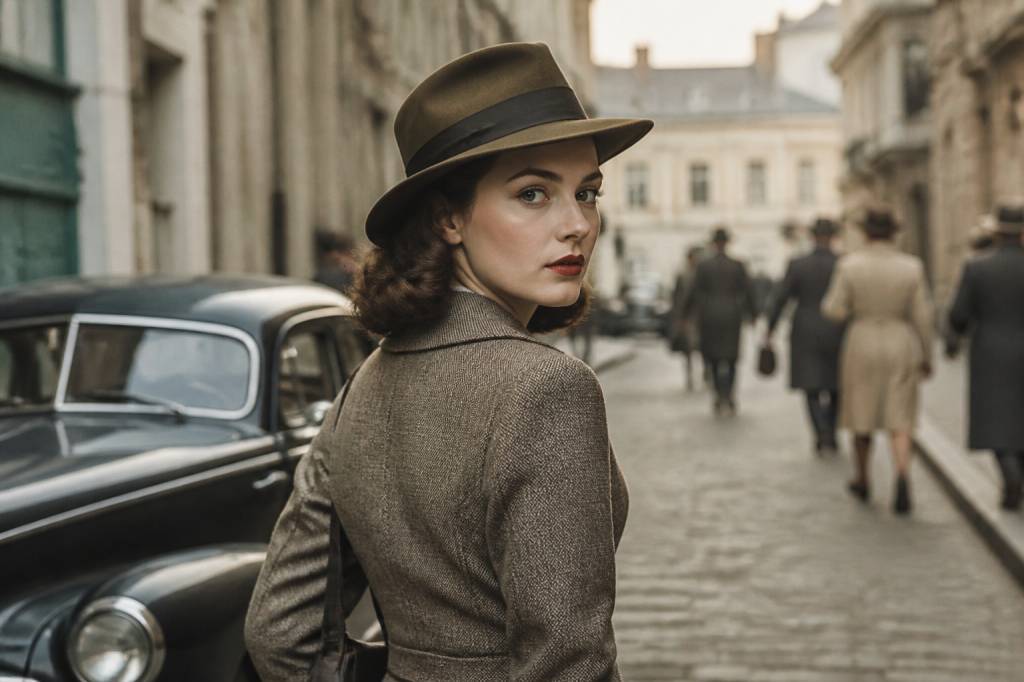
There is something wonderfully magnetic about 1940s fashion. Perhaps it is the confident shoulder line, the neatly cinched waist, or the way a simple headscarf can transform an ordinary outfit into a complete look. Whenever I browse vintage boutiques in Paris, I find myself drawn to pieces inspired by the 1940s: a fitted jacket, a softly structured handbag, a pair of high-waisted trousers. They feel polished without looking overworked, feminine without being fragile, and practical without sacrificing personality.
The 1940s were shaped by enormous social and historical changes, especially the Second World War. Clothing had to become more useful, economical, and durable. Fabrics were rationed, wardrobes were adapted, and women entered workplaces traditionally occupied by men. Yet style did not disappear. Instead, it became inventive. People learned to make a little go a long way, proving that elegance is not necessarily about having more clothes—it is often about wearing what you have with imagination.
Many of those ideas still feel surprisingly modern today. Here are the 1940s clothing trends I continue to love, wear, and recommend whenever someone asks me how to add timeless character to a contemporary wardrobe.
Strong shoulders and confident tailoring
One of the most recognisable details of 1940s fashion is the strong shoulder. Jackets, blouses, and dresses often featured structured shoulders that created a powerful, balanced silhouette. The waist remained defined, while the upper body took centre stage. It was a look that communicated confidence without needing a single dramatic accessory.
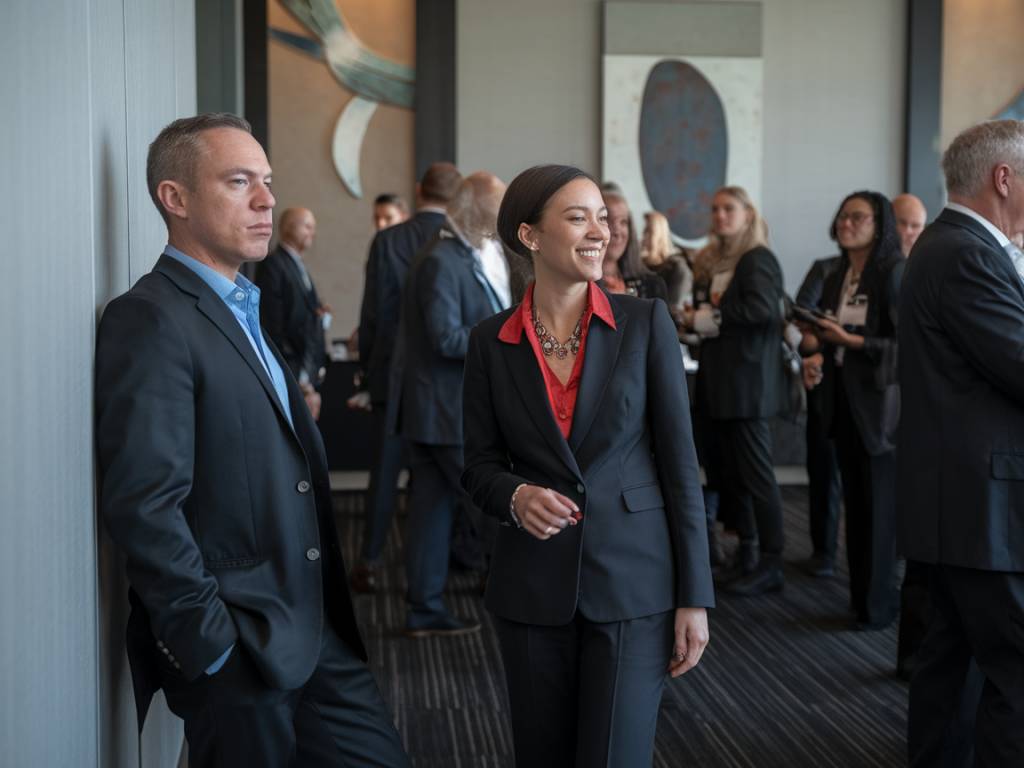
Today, this shape is easy to introduce through a tailored blazer. Look for slightly padded shoulders, a fitted waist, and a clean lapel. You do not need to dress from head to toe in vintage-inspired pieces. A structured blazer worn over a simple white T-shirt and straight-leg jeans can instantly make an everyday outfit feel more intentional.
I have a navy blazer in my wardrobe that I bought during one of my “I am only going to look” shopping trips—an expression that has never been entirely honest in my case. Its shoulders are beautifully shaped, and it works just as well with a silk skirt as it does with denim. That is the magic of 1940s-inspired tailoring: it gives even the simplest combination a little authority.
The elegant utility of wartime fashion
It is important to remember that 1940s fashion was not only about glamour. During the war years, clothing was affected by shortages and strict regulations. In Britain, the Utility scheme encouraged the production of well-made garments using standardised designs. In the United States, the War Production Board introduced rules that limited fabric use and decorative details.
These restrictions influenced hemlines, pockets, pleats, cuffs, and the amount of material used in skirts. Extravagant details became less common, while practical construction became essential. Dresses were often carefully designed to look attractive while remaining suitable for work, travel, and daily responsibilities.
This focus on utility has plenty to teach us now. A beautiful garment should also be comfortable, functional, and capable of fitting into real life. When shopping, I like to ask myself three questions:
- Can I style this item in at least three different ways?
- Will the fabric and construction hold up over time?
- Does it suit my lifestyle, rather than only looking beautiful on a hanger?
These questions may not sound as glamorous as discussing sequins, but they have saved me from many questionable purchases. A wardrobe inspired by the 1940s is not about collecting costumes. It is about choosing pieces that work hard and still make you feel lovely.
High-waisted trousers with a polished attitude
High-waisted trousers became an important part of women’s wardrobes during the 1940s, especially as more women worked in factories, offices, and other essential roles. Wide-leg trousers, often worn with tucked-in shirts or fitted knitwear, offered comfort and freedom of movement while maintaining a neat appearance.
This silhouette remains one of my favourite ways to look instantly put together. Choose trousers with a defined waistband, a fluid leg, and a length that works with loafers, ballet flats, or a small heel. A pair in navy, charcoal, camel, or cream will be much easier to style than an overly dramatic print.
For a modern outfit, try high-waisted trousers with a fitted cardigan and a narrow belt. Add a structured handbag and simple earrings, and you have a look that feels elegant without appearing too formal. If you prefer something more relaxed, wear them with a tucked-in cotton shirt and clean white trainers. The contrast between vintage tailoring and contemporary shoes is particularly chic.
And may I say, high-waisted trousers are also excellent allies on days when you want a little extra structure. Fashion can be beautiful and forgiving at the same time—a quality I appreciate after an ambitious Parisian lunch.
Tea dresses and the charm of the practical feminine look
The 1940s tea dress was usually modest, wearable, and softly feminine. Common features included a fitted bodice, a defined waist, a below-the-knee skirt, short or three-quarter sleeves, and a button-front design. Floral prints, polka dots, checks, and small geometric patterns were especially popular.
What I love most about this style is its versatility. A tea dress can feel romantic with a pair of low heels, casual with ankle boots, or contemporary with a leather jacket. It does not demand excessive styling because the shape already provides definition.
When choosing a 1940s-inspired dress today, pay attention to fabric. Cotton, viscose, linen blends, and lightweight wool can create the right drape without making the outfit feel like a theatrical costume. The goal is to capture the spirit of the era, not to look as though you have stepped directly out of a film set—unless that is precisely the plan, in which case, do bring the red lipstick.
A wrap dress can offer a similar effect. It highlights the waist, creates a flattering neckline, and adapts easily to different body shapes. Wear one with a cardigan for daytime and add statement earrings for an evening appointment.
Blouses with beautiful details
Blouses were an important part of 1940s dressing, particularly because they allowed women to refresh their wardrobes without buying a completely new outfit. Peter Pan collars, pussy-bow ties, rounded collars, gathered sleeves, and delicate buttons added interest to otherwise simple looks.
Today, a blouse with one distinctive detail can do the same job. A bow at the neck brings softness to tailored trousers. A high collar looks elegant beneath a blazer. Slightly puffed sleeves can add a romantic touch to a straight skirt or a pair of jeans.
My favourite way to wear this trend is with a blouse in ivory or pale blue, tucked into a high-waisted skirt. I keep the jewellery minimal and let the collar do the talking. This is one of those outfits that makes people assume you have made a tremendous effort, when really the blouse has done most of the work. Every wardrobe deserves at least one hardworking fashion accomplice.
The power of the pencil skirt
The pencil skirt is often associated with the 1950s, but its roots can be found in the streamlined, practical silhouettes of the 1940s. During wartime, skirts became narrower and less fabric-intensive than the fuller styles of previous decades. The result was a sleek shape that followed the body without excessive volume.
A modern pencil skirt does not have to feel restrictive. Look for a design with a little stretch, a comfortable waistband, and a length that allows you to walk easily. Pair it with a tucked-in knit, a simple blouse, or an oversized jacket for contrast.
For a contemporary interpretation, I particularly enjoy wearing a pencil skirt with flat shoes. Ballet flats, loafers, and even minimalist trainers can make the look feel relaxed rather than office-bound. Add a belt at the waist and perhaps a small brooch on the lapel of your jacket for a subtle vintage reference.
Headscarves, turbans, and clever hair styling
Accessories became especially important in the 1940s. When new clothes were difficult to obtain, a headscarf, hat, or piece of jewellery could make an existing outfit feel fresh. Headscarves were also practical for women working in factories, helping to protect hair while adding a touch of personality.
The classic headscarf is one of the easiest trends to try today. Fold a square scarf into a triangle and tie it beneath your chin for a relaxed vintage effect, or wrap it around a ponytail for something more understated. You can also knot a narrow scarf at the back of your neck or weave it through a braid.
Choose prints that complement your wardrobe rather than compete with it. A red-and-white polka dot scarf brings energy to a navy outfit, while a neutral silk scarf works beautifully with cream, camel, and black. On rushed mornings, it can also disguise hair that has not quite agreed to cooperate. Fashion and emergency planning—what a partnership.
Victory rolls and the beauty of red lipstick
1940s beauty was polished but not necessarily complicated. Hair was often styled in curls, waves, rolls, or carefully arranged updos. Victory rolls became an iconic look, while shoulder-length hair was frequently worn with volume and movement.
You do not need to recreate a full vintage hairstyle to borrow the mood. Try soft waves, a side parting, or a low bun with a few face-framing strands. A curling iron, setting spray, and patience can help, although I admit patience is not always my strongest beauty tool.
Makeup focused on a fresh complexion, defined brows, subtle eyes, and a red or berry-toned lip. The red lipstick of the era was not simply decorative; it became a symbol of confidence and morale. Today, you can choose a shade that suits your skin tone, from blue-based cherry red to warm tomato or deep brick.
If a bold lip feels intimidating, keep the rest of your makeup simple. Apply mascara, groom your brows, add a touch of blush, and let the lipstick become the centre of attention. It is one of the quickest ways to make a basic outfit feel complete.
Small handbags and sensible shoes
Accessories in the 1940s were elegant, but they also had to be useful. Structured handbags, compact top-handle styles, gloves, belts, and modest jewellery helped create a finished appearance. Shoes were generally practical, with sturdy heels, lace-up designs, and comfortable rounded toes.
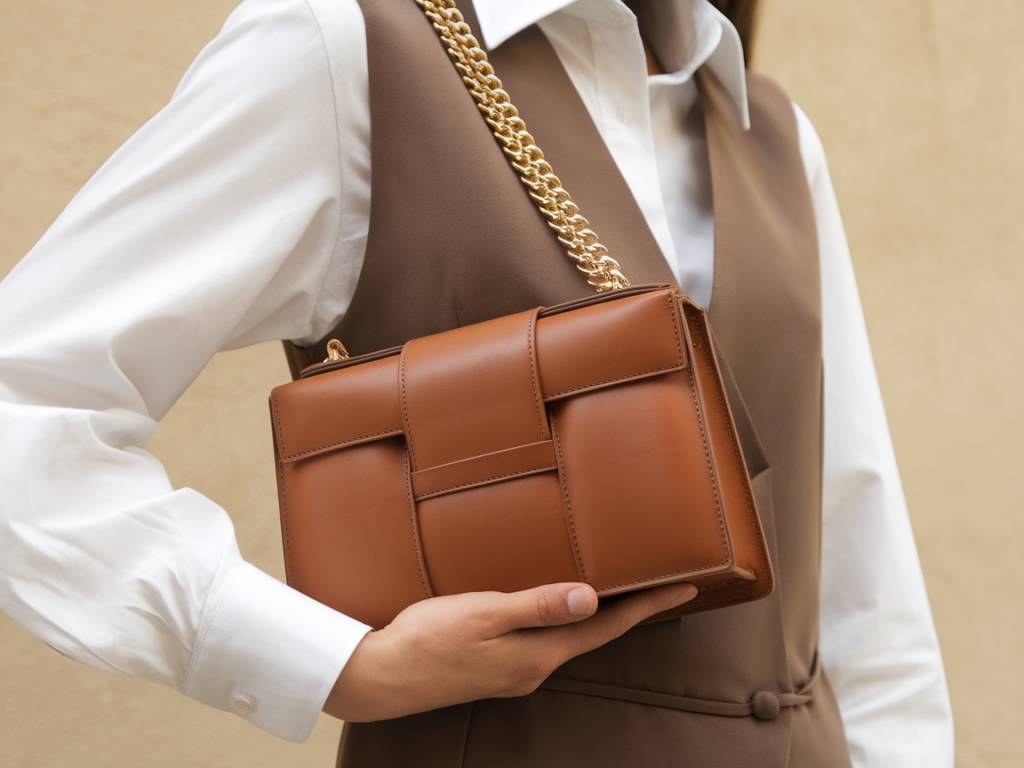
For a modern wardrobe, a small structured bag is a wonderful investment. It can make jeans and a sweater feel more refined, especially in leather, faux leather, or a carefully chosen textured fabric. Look for a bag that holds your essentials without encouraging you to carry half your life around Paris.
Low heels, Mary Janes, loafers, and ankle boots also capture the spirit of the period. They are comfortable enough for daily wear and polished enough for a dinner date. A two-tone shoe, particularly one with a rounded toe or ankle strap, can add a playful vintage accent without overwhelming your outfit.
How to wear 1940s style without looking like you are in costume
The easiest approach is to combine one or two vintage-inspired elements with modern basics. For example, wear a strong-shouldered blazer with straight-leg jeans, or style a tea dress with contemporary boots. Pair high-waisted trousers with a simple tank top and a modern shoulder bag.
- Choose one statement detail, such as a headscarf, red lipstick, or structured jacket.
- Balance feminine pieces with relaxed items like denim, trainers, or a roomy coat.
- Pay attention to fit, because tailoring is more important than historical accuracy.
- Use quality accessories to give simple clothing a more polished finish.
- Avoid wearing every vintage reference at once unless you are attending a themed event.
Colour can also make a major difference. Deep navy, burgundy, forest green, chocolate brown, cream, dusty rose, and classic red all work beautifully with 1940s-inspired shapes. If you prefer a softer look, build an outfit around warm neutrals and add one vivid accessory.
Why these trends still feel relevant
The enduring appeal of 1940s fashion comes from its balance. It was refined but practical, feminine but strong, carefully styled but grounded in everyday life. These clothes were designed for movement, work, and changing circumstances. They offered confidence at a time when confidence was deeply needed.
That balance is just as valuable now. We want clothing that photographs beautifully, but we also want to walk comfortably, carry our essentials, and feel like ourselves. A defined waist, a well-cut jacket, or a pretty blouse can change the way we stand and move through the day. Sometimes style is not about attracting attention; it is about giving yourself a small boost before stepping out the door.
So the next time you are looking for inspiration, take a little journey back to the 1940s. Try a pair of high-waisted trousers, tie a scarf in your hair, or add a red lip to your favourite everyday outfit. You may discover, as I have, that the most timeless trends are not the loudest ones. They are the pieces that help you feel composed, expressive, and entirely at home in your own style.